


Why the Oldest Metaphysics in Asia Is Becoming the Newest Operating System for Modern Leaders.
By now, most CEOs have realized that competitive advantage no longer comes from capital, technology, or talent alone — it comes from coherence. How well a company’s people, decisions, and energy move in one rhythm.
Interestingly, Chinese Metaphysics figured this out 2,000 years ago.
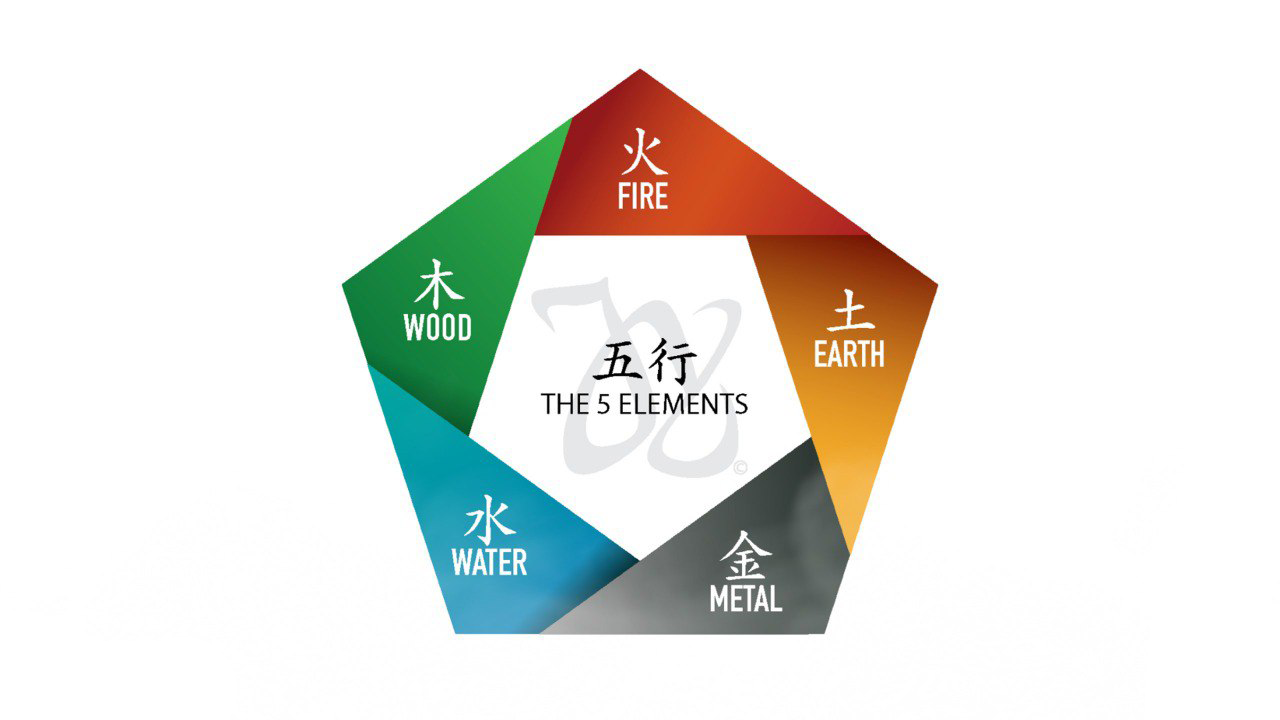
The Five Elements — Wood, Fire, Earth, Metal, Water — are traditionally seen as a spiritual model. But look at them through a business lens and something surprising appears:
They form a complete organizational operating system.
When you strip away the mystique, the Five Elements are actually about:
How momentum is created.
How value is generated.
How teams self-organize.
How leaders make or break cycles.
Think of them as the original “network effects” of human behavior.
Let’s translate each element into business language — the way a CEO or CHRO can actually use.
1. Wood — The Founder DNA: Vision, Expansion, Innovation
Every company begins with a Wood moment.
Wood is the spark of expansion — the push toward the unknown.
In business, Wood shows up as:
- Strategic vision
- Product innovation
- Market expansion
- Entrepreneurial aggression
- Bold, uncomfortable decisions
When a company’s Wood is strong, you feel it: people challenge assumptions, break rules, and refuse to stay small.
But when Wood becomes “excessive,” you get:
- constant pivots
- expansion with no execution
- founders who are visionary but directionally chaotic
A CEO must ask:
Are we scaling with intention, or are we just “growing because we can”?
2. Fire — The Brand Engine: Momentum, Culture, Visibility
Fire is momentum made visible.
It’s the phase where ideas ignite into brand, emotion, and momentum.
In business, Fire is:
- Marketing
- Storytelling
- Culture building
- Employee engagement
- Customer excitement
- Leadership charisma
Companies with strong Fire feel alive — you see energy, speed, passion.
But excessive Fire burns fast:
- high turnover
- burnout
- culture hype with no backbone
- leaders addicted to “being inspirational” without substance
CHROs know this well:
No amount of corporate values can compensate for a burning-out workforce.
3. Earth — The Operating Core: Stability, Systems, Trust
If Wood is expansion and Fire is momentum, Earth is the platform everything stands on.
Earth is the boring-but-essential layer:
- Structure
- Processes
- HR systems
- Governance
- Predictability
- Trust
A company lacking Earth is exciting… until it collapses under its own improvisation.
But too much Earth becomes bureaucracy, slowness, committees, meetings about meetings.
This is the moment CEOs dread:
We didn’t scale the company — we scaled the complexity.
4. Metal — The Executive Discipline: Logic, Efficiency, Accountability
Metal is refinement.
It cuts, clarifies, and focuses the organization.
In business terms, Metal is:
- KPI discipline
- Financial clarity
- Decision frameworks
- Performance management
- Compliance
- Operational excellence
Metal is what turns a good business into a profitable one.
But excessive Metal looks like:
- micromanagement
- fear-based culture
- too many rules
- creativity dying under precision
The CEO question here is:
Are we sharpening the sword — or cutting our own people with it?
5. Water — The Enterprise Wisdom: Insight, Adaptation, Long-Term Strategy
Water is intelligence.
While Fire is energy outward, Water is energy inward — quiet, analytical, reflective.
In business, Water appears as:
- Strategic foresight
- Data and insights
- Scenario planning
- M&A strategy
- Reinvention
- Macroeconomic sensitivity
- Long-term intelligence gathering
Water is how a company stays relevant over decades.
But too much Water becomes:
- analysis paralysis
- overthinking
- slow decision loops
- leaders who hide in planning instead of acting
The best CEOs master this balance:
Think like Water, execute like Fire.
The Real Power:
The Five Elements Form a Continuous Business Cycle**
When you zoom out, you realize the Five Elements are not five separate traits — they are a sequence of corporate growth:
- Wood → Vision
- Fire → Momentum
- Earth → Stability
- Metal → Discipline
- Water → Insight
- (Back to Wood) → Reinvention
This is essentially the same loop as:
Startup → Growth → Scale → Optimization → Reinvention
In other words:
Chinese metaphysics already solved business transformation — centuries before management theory caught up.
How Leaders Can Use This Framework Immediately
1. Diagnose your leadership team
Do you have too much Fire (charisma) and not enough Metal (discipline)?
Too much Earth (process) and no Wood (vision)?
Too much Water (strategy) with no Fire (execution)?
This is not personality.
This is energy pattern.
And it explains why some teams feel “imbalanced” no matter how many offsites you do.
2. Build teams by Element Mix, not job titles
A high-growth team needs:
- Wood + Fire → founders + evangelists
- Earth + Metal → operators + CFO discipline
- Water → strategist + foresight
When one element is missing, projects slow, collapse, or burn out.
3. Align roles to natural Element strengths
Some people are built to innovate (Wood).
Some to energize (Fire).
Some to stabilize (Earth).
Some to refine (Metal).
Some to see patterns before they emerge (Water).
Matching these strengths to the right roles unlocks performance without forcing people into fatigue.
4. Time major strategic moves with Element cycles
Every year and decade carries a dominant Element.
For CEOs, this means:
- When the macro-cycle is Wood → expansion works
- When it is Earth → consolidation works
- When it is Water → reinvention is non-negotiable
This is why Asian family businesses have stayed alive for 4–6 generations —
they don’t fight the cycle; they ride it.
The Bottom Line
The Five Elements aren’t fortune-telling.
They are pattern recognition.
A strategic lens for understanding human energy, corporate behavior, and organizational timing.
Leaders don’t need to “believe” in metaphysics to benefit from it.
Just like gravity doesn’t require your belief to work —
the dynamics of Wood, Fire, Earth, Metal, and Water operate whether you acknowledge them or not.
If you’re a CEO or CHRO navigating uncertainty, rapid change, or organizational complexity, the Five Elements offer something rare:
A language that integrates people, culture, performance, and direction —
into one coherent strategic model.
Because the companies that thrive in the next decade won’t just be efficient or innovative.
They will be energetically aligned.
And alignment — not speed — is the ultimate unfair advantage.